
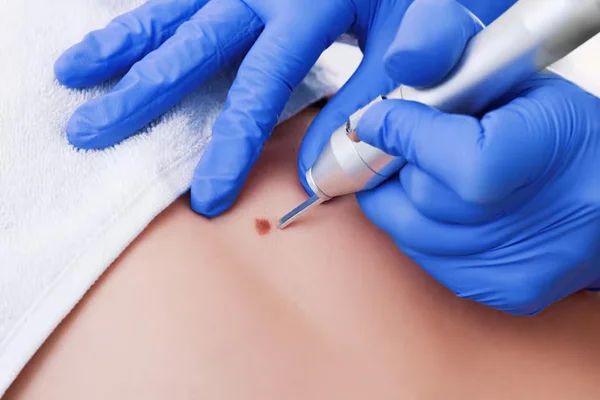
A mole, also known as a nevus, is a common growth on the skin that can vary in size, shape and colour. Most moles are harmless, but some may become bothersome because of their location, repeated friction or cosmetic appearance.
Mole removal involves removing an unwanted mole using an appropriate procedure after evaluating its appearance and characteristics. At Smiling Faces Clinic, Fatehabad, patients can receive professional assessment and treatment planning for moles that require removal.
The method used depends on the mole's size, depth, location and clinical appearance. If a mole has unusual or changing features, further evaluation may be necessary before or after removal.
Mole removal is a procedure used to remove a benign or suspicious skin mole. Depending on the individual case, a healthcare professional may recommend techniques such as:
The choice of procedure depends on the type and characteristics of the mole.
Moles should not be removed at home using acids, cutting tools or unverified remedies, as this can lead to infection, scarring or incomplete removal.
People may seek mole removal for several reasons, including:
A proper examination is important before deciding on removal.
Although most moles are harmless, changes in an existing mole should be evaluated by a qualified professional.
Seek medical assessment if a mole shows changes such as:
These signs do not necessarily mean that a mole is cancerous, but they warrant appropriate evaluation.
The exact procedure depends on the characteristics of the mole.
The mole is assessed for its size, shape, colour, location and other relevant features.
Based on the assessment, the most appropriate removal technique is selected.
For many minor mole removal procedures, local anaesthesia may be used to numb the treatment area and improve comfort.
The mole is carefully removed using the selected technique. In some cases, the removed tissue may be sent for laboratory examination.
The treatment area is cleaned and dressed as required. Instructions are provided regarding wound care and follow-up.
In selected superficial moles, a specialized technique may be used to remove the raised portion of the mole from the skin surface.
For certain moles, complete surgical excision may be recommended. The mole and an appropriate margin of surrounding skin may be removed, and the wound may require stitches.
There is no single mole removal method that is appropriate for every mole. The decision depends on:
Appropriate mole removal may offer benefits such as:
The cosmetic result depends on the size and location of the mole, the removal technique and individual healing.
Recovery varies according to the removal method and size of the treated area.
Patients may experience temporary:
The wound should be kept clean and protected according to the instructions provided.
Patients should avoid scratching or picking at the treated area, as this can interfere with healing and increase the risk of scarring.
Any procedure that removes tissue from the skin can potentially leave a scar. The final appearance depends on the size and depth of the mole, its location, the procedure used and the individual's healing process.
Following wound-care and sun-protection instructions can support proper healing and help reduce unwanted pigmentation changes.
Most benign moles can be removed when there is a suitable clinical reason. However, a mole with suspicious characteristics may require more detailed evaluation and complete excision rather than cosmetic removal alone.
The priority should always be appropriate medical assessment before choosing a removal technique.
Smiling Faces Clinic, Fatehabad provides professional evaluation and treatment planning for patients seeking mole removal.
If you have an unwanted mole that is causing cosmetic concern, irritation or repeated trauma, professional evaluation can help determine whether removal is appropriate.
Smiling Faces Clinic in Fatehabad provides consultation for mole removal, with the treatment method selected according to the mole's appearance, size, location and clinical characteristics.
If a mole has recently changed in size, shape or colour, medical evaluation should be prioritized before considering cosmetic removal.
Mole removal is generally a routine minor procedure when performed appropriately, but every procedure has potential risks such as infection, bleeding or scarring.
Some superficial moles may be suitable for shave removal, while others may require surgical excision. The appropriate method depends on the mole.
A scar is possible after mole removal. Its appearance depends on the size, depth and location of the mole, the removal technique and individual healing.
Yes, removal may be considered for cosmetic reasons when the mole has been appropriately assessed.
A changing mole should first be professionally evaluated. Depending on the findings, further examination, biopsy or complete removal may be recommended.
Local anaesthesia is commonly used for many minor removal procedures, which helps reduce pain during the procedure. Mild discomfort may occur afterward.
Recovery depends on the size and type of procedure. Your healthcare professional will provide specific wound-care and activity instructions.
Smiling Faces Clinic, Fatehabad provides professional consultation and treatment planning for individuals considering mole removal.



Write a Reply or Comment