
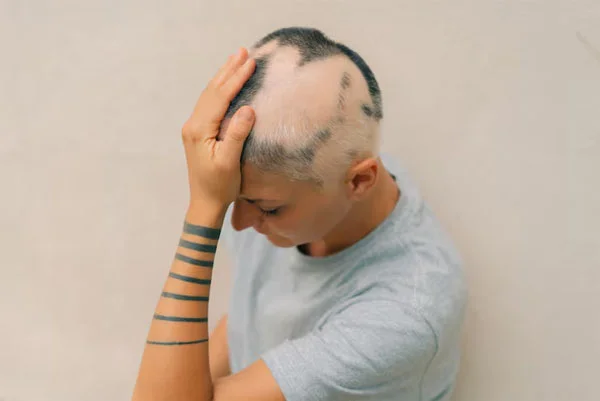
Sudden, patchy hair loss can be concerning, especially when smooth, round or oval areas of hair loss appear on the scalp or other parts of the body. Alopecia Areata Treatment in Fatehbad focuses on identifying the condition, assessing its severity, and selecting an appropriate treatment approach to help manage hair loss and support regrowth where possible.
Dr. Neha Mehta provides personalized hair and scalp care at Smiling Face Clinic, Fatehbad, with treatment plans based on the pattern and extent of hair loss and the individual patient's needs.
Alopecia areata is a condition in which the immune system mistakenly targets hair follicles, resulting in hair loss. It commonly produces sudden, well-defined patches of hair loss on the scalp, although eyebrows, eyelashes, beard areas, and other body hair can also be affected.
The condition can behave differently from one person to another. Some individuals may experience a single small patch, while others can develop multiple patches or more extensive hair loss.
Because hair loss can have many causes, proper diagnosis is an important first step.
Alopecia areata may present with:
In some cases, the hair may begin growing back without treatment, while others may require medical management.
Alopecia areata is associated with an abnormal immune response directed toward hair follicles. The exact reason why this happens is not completely understood.
Several factors may be associated with the condition, including:
Stress is sometimes reported around the time of hair loss, but it is not considered the sole cause of alopecia areata.
The condition can appear in different patterns.
This is the most common form and involves one or more localized patches of hair loss.
This involves extensive or complete hair loss from the scalp.
This is a more extensive form in which hair loss can affect the scalp as well as other body areas.
The treatment approach and expected course can vary depending on the type and extent of hair loss.
Professional evaluation is recommended when you notice:
Early assessment can help confirm the diagnosis and distinguish alopecia areata from other causes of hair loss.
There is no single treatment suitable for every patient because alopecia areata can vary significantly in severity.
During consultation, Dr. Neha Mehta may examine the scalp and affected areas closely and review the pattern and progression of hair loss.
Depending on the presentation, additional evaluation may be considered to rule out other causes of hair loss or identify associated conditions.
A correct diagnosis helps ensure that the treatment is directed toward the actual cause of the hair loss.
The appropriate treatment depends on the extent and activity of the condition.
Certain topical or injectable medications may be considered to reduce inflammation around affected hair follicles and encourage regrowth in suitable cases.
The choice of treatment depends on the number and size of patches, duration of hair loss, age, medical history, and other factors.
Selected light-based treatments may sometimes be considered as part of a broader management approach. Their suitability depends on the individual case.
Maintaining appropriate scalp care can help protect the scalp while medical treatment is underway. Gentle hair care and avoiding unnecessary chemical or physical irritation may be recommended.
Seeking professional Alopecia Areata Treatment in Fatehbad can help with:
Treatment is focused on managing the condition rather than promising a guaranteed cure.
Treatment begins with a detailed evaluation of the scalp and the pattern of hair loss.
Once alopecia areata is suspected or confirmed, Dr. Neha Mehta can discuss the available treatment options based on your individual condition.
Depending on the treatment selected, follow-up appointments may be required to monitor changes in the affected areas and assess hair regrowth.
Treatment may need to be adjusted if new patches appear or the existing areas change.
Yes, hair can regrow in alopecia areata, particularly in cases involving limited patches. However, the course of the condition is unpredictable.
Some patients experience spontaneous regrowth, while others may have recurring or persistent hair loss.
Hair regrowth can initially appear fine, light, or different in texture before gradually becoming more similar to the surrounding hair.
Alopecia areata does not always result in permanent hair loss. Many people with limited disease experience regrowth.
However, extensive, long-standing, or recurrent alopecia areata can be more difficult to manage and may have a different prognosis.
This is why regular monitoring and appropriate treatment can be important, particularly when hair loss is spreading.
People with alopecia areata may notice hair loss during or after periods of significant stress, although stress is not necessarily the direct cause.
Because alopecia areata itself can be emotionally difficult, addressing the condition early and receiving appropriate support can be valuable.
A healthy routine, adequate sleep, balanced nutrition, and appropriate stress management may support overall well-being but should not replace medical treatment when treatment is required.
While undergoing treatment, gentle hair and scalp care can help minimize unnecessary irritation.
Consider:
Specific recommendations may vary according to the severity and location of hair loss.
At Smiling Face Clinic, Fatehbad, Dr. Neha Mehta takes an individualized approach to hair-loss concerns.
For Alopecia Areata Treatment in Fatehbad, the focus is on understanding the pattern and progression of hair loss before recommending treatment. Since alopecia areata can behave differently in different individuals, ongoing assessment is an important part of care.
The aim is to manage the condition appropriately, support hair regrowth where possible, and provide realistic guidance throughout treatment.
Sudden patchy hair loss should not automatically be assumed to be ordinary hair thinning. Alopecia areata and other conditions can produce similar-looking changes, making professional assessment important.
For personalized Alopecia Areata Treatment in Fatehbad, consult Dr. Neha Mehta at Smiling Face Clinic for evaluation and an individualized treatment plan.
1. Is alopecia areata permanent?
Not necessarily. Hair can regrow in many people, particularly those with limited patchy disease. However, the condition can recur and its course varies.
2. What does alopecia areata look like?
It commonly appears as sudden, smooth, round or oval patches of hair loss on the scalp or other hair-bearing areas.
3. Can alopecia areata be treated?
Yes. Several treatment options may be considered depending on the extent and activity of hair loss. Treatment aims to manage the condition and support regrowth where possible.
4. Can alopecia areata affect eyebrows and eyelashes?
Yes. Although scalp hair is commonly affected, alopecia areata can also involve eyebrows, eyelashes, beard areas, and other body hair.
5. Can stress cause alopecia areata?
Stress may be associated with the onset or worsening of hair loss in some individuals, but alopecia areata is primarily associated with an abnormal immune response affecting hair follicles.
6. How quickly can hair grow back?
Regrowth varies considerably. Some patches may begin improving relatively quickly, while others can take longer or require treatment.
7. Should I see a doctor for sudden bald patches?
Yes. Sudden or rapidly progressing patchy hair loss should be professionally evaluated to confirm the cause and determine an appropriate treatment plan.



Write a Reply or Comment